
by Pamela Yates | republished from Skylight
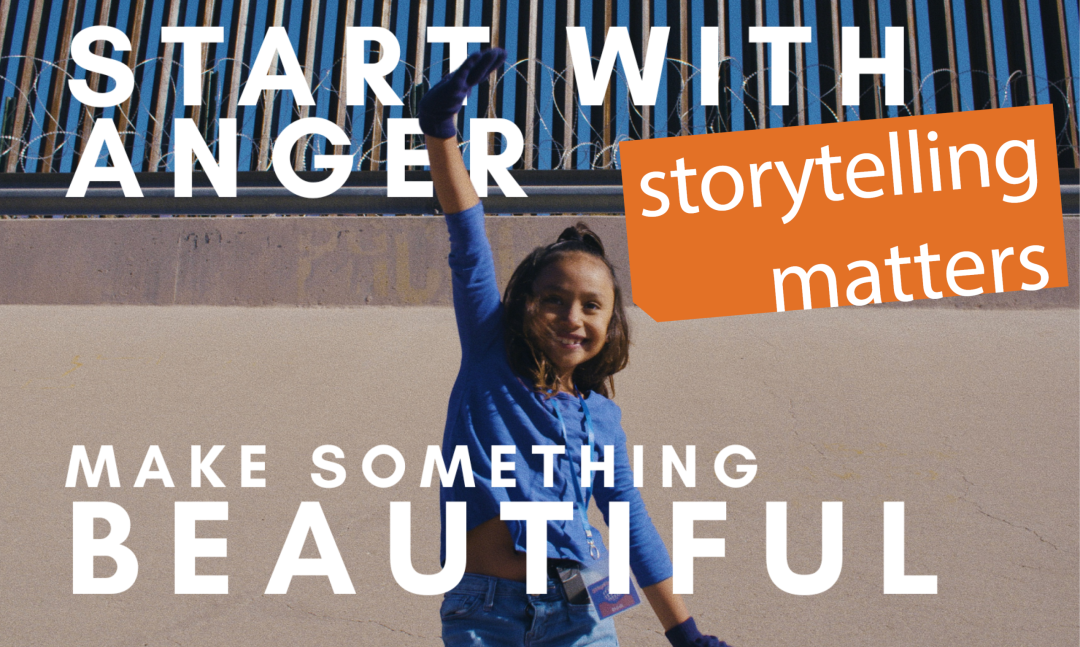
I’m often asked these questions: “How did you come up with the idea for this film?” and, “How did you find your way into the story?” And inevitably,” What should I make a film about”? I always answer, “What makes you really really angry? Channel that anger into making a beautiful film, full of pathos that engages with the human condition. Address your anger, address the issue. Find the truth tellers.”
All of our documentaries are original ideas, not based on a book or article. Nor are they single character driven. Each is a unique journey of discovery. I start out with an idea, a concept, and then broaden and deepen the story as I myself realize its power. I try to take the audience with me on this journey–extensively researching, exposing truths, and connecting with astonishing protagonists as our narrative unfolds.

Here’s my secret: with BORDERLAND | The Line Within, I didn’t discover my way into the story until a year after beginning production. Broadly speaking, the documentary was to be about worsening repression against immigrants into the U.S., especially the suffering of families being torn apart. I was planning to profile people living in this country who were finding a way forward, creatively welcoming immigrants, assisting them, and speaking out. Even if it meant breaking unjust laws to protect their neighbors.
Yet it was only when I discovered the Digital Humanists at Columbia University uncovering the amount of money from the federal budget being spent on capturing, incarcerating, deporting and separating families that I realized this was the thread to weave everyone else’s stories together. The Digital Humanists channeled their anger through the cinematic data visualization of what we now call the border-industrial complex, the massively profitable businesses built on the suffering of immigrants.
Eventually, it took the whole film team to realize BORDERLAND, especially Editor Peter Kinoy and Producer Paco de Onís. The end credits are five minutes long and demonstrate that over 100 people contributed their artistry, participation, and thinking to this film.

While the production of BORDERLAND the film has ended, immigration repression has not. Our film has become an important part of organizing efforts while the border-industrial complex has grown exponentially. What we predicted in 2024–that the border is everywhere–has sadly come to pass.
The border-industrial complex budget has tripled for the next four years. Just this past summer, Congress gave D.H.S. $45 billion to build more jails. And $38 billion of that money will be spent buying up large warehouses across the country to convert them into massive immigration prisons, from where people will be deported. These prisons are managed by private companies making $152 a bed, per person, per night.
As I write this approximately 70,000 people are being held in these prisons. That’s more than $10 million a day. The collective outcry and massive video documentation contributed to forcing Kristi Noem’s firing, but will this be an incremental win for more humane immigration policies? After Minneapolis we are sure that no institutions will protect us. “Only Us will protect Us.” Keep up the pressure.
During our 50-city tour with BORDERLAND | The Line Within, immigrant leaders told us their communities clamor to assert their dignity and speak out to denounce the abuses they have suffered. They want to be heard, to have their experiences validated and recorded, to counter the dehumanizing narratives, to contribute to a historical record that might someday support accountability. They want to know they are not alone. We heard many of these voices at our screenings, sharing highs and lows, stories of courage, of daring, of tragedy, of renewal, of awakening.
And that gave us the idea for our next film initiative, the sequel we are calling The Truth Tellers. The initiative will create Community Truth Commissions across the United States; a comprehensive archive incorporating video, audio, written and artistic testimony documenting this dark passage through history; and a documentary film that tells the behind-the-scenes and in-the-streets story of how it all cam]e together.
We invite you to follow us on this journey. Stay tuned.
Featured image: Gabriela Murillo, standing in front of the U.S. border wall, waves to her father across the border in Mexico. (Photo by Juan Hernández, AEC)