
From the Executive Director

AI is taking up so much brain space these days. My conversations with friends and colleagues reflect a widespread adoption of AI tools and a growing tension shared by nearly everyone about our responsibility to hold corporations accountable while we provide access for our communities to the technology. I am pleased to be part of many new groups of folks exploring the creative possibilities of AI as well as its limits, ethics, and dangers. Toolkits have been published, research is ongoing. I do admit that questioning and assessing images, words, and sounds to determine their human or machine provenance clenches my heart like a little fist.
The Alliance for Media Arts + Culture’s board and staff are in an evolutionary set of conversations about how we as an organization navigate this moment in time, and how our work as a national media arts service organization should adapt. We, and our members and our partner organizations, face tough fiscal times. New operational models and reduced programming and staffing are leading indicators of our shared resilience — the visionary work goes on.
This is National Apprenticeship Week. As many of you know, during the final year of the Obama administration, the Alliance designed, developed, and launched Arts2Work, the first registered Apprenticeship program in Media Arts + Creative Technologies. We created the first ever national model for paid Apprenticeships for Multimedia Producers, Digital Editors, Multimedia Graphic Designers and Digital Archivists, committed to equity, diversity, and access for all. We created opportunities for media arts organizations across the country to participate as certified workforce training centers, to serve low-income and justice-impacted trainees and receive their own federal and state funding for which they were previously ineligible. Even in these current dark times, amidst corporate consolidation, strikes, AI-related staff reductions — we are a community that shows up for one another and builds for the next generation.

As always, now is a really good time to join the Alliance, GIVE to support the programs you love like Arts2Work, our Innovation Studio, and the Open Archive Initiative — and show some love to the artists in your life who tend our collective spirit.
~ Wendy


Notes from the Field
Wide Angle Youth Media Screening Breaking the Blue Wall
Join Wide Angle Youth Media for screening, director interview, and Q&A of the film Breaking the The Blue Wall, Friday, May 1st, at their studio in Baltimore. Breaking the Blue focuses on activists and lawmakers working to repeal the Maryland Law Enforcement Officer’s Bill of Rights, a piece of legislation that limited investigation into and prosecution of police misconduct. The event’s speakers will include director Alissa Figueroa, and Wide Angle Production Staff, who were involved in the production of the film.
It Will Be Seen: Indie Distribution in 2026
This Thursday, April 30th, the Alliance will be hosting a virtual conversation about independent film distribution. The conversation will introduce participants to lesser-known film distributors and offer the opportunity to ask questions about the process. Speakers present will be Annallisa Shoemaker, founder and CEO of Suncatcher Productions, David Averbach, leader of digital distribution at The Film Collaborative, Orly Ravid, founder of The Film Collaborative. The conversation will be hosted by the Alliance’s Taylor Jett.

Grants and Calls
(Egg)celerator Lab
Women and gender-expansive filmmakers working on their first or second feature-length documentary can apply to the (Egg)celerator Lab, a year-long program supporting documentary projects in production. Selected filmmakers receive a $40,000 grant, along with mentorship, industry connections, and creative retreats.
Deadline: April 29th
Film Independent Documentary Producing Lab
Documentary filmmakers with a feature-length documentary project in the final stages of production or early post-production are encouraged to apply to the Film Independent Documentary Producing Lab. The lab seeks to support filmmakers through the editing phase with workshops and sessions led by a range of film professionals.
Deadline: May 4th
SFFILM Rainin Grant
The SFFILM Rainin Grant offers up to $25,000 to independent narrative feature film projects. Eligible projects must be feature-length and address social issues, with a focus on supporting filmmakers connected to the Bay Area. Grants are available for Screenwriting, Development, or Post-Production. Recipients of the Screenwriting and Development grants also receive residencies through FilmHouse to support those stages of their projects.
Deadline: May 8th

Workshops, Festivals, Convenings
Margaret Mead Film Festival, May 1st–3rd, Manhattan, NY
Seattle International Film Festival, May 7th – 17th, Seattle, WA
American Black Film Festival, May 27th – 31st, Miami Beach, FL
Mendocino Film Festival, May 28th – 31st, Mendocino, CA
Brooklyn Film Festival, May 29th – June 7th, Brooklyn, NY
Media Policy Watch
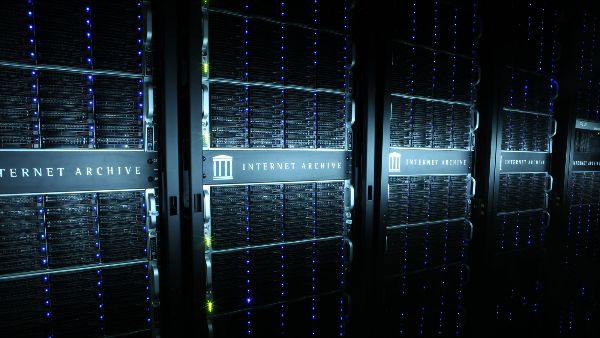
The Internet Archive’s tool Wayback Machine, which offers timestamped records of web pages across the internet, is being blocked by news platforms from using the AI web crawlers it uses to maintain its library on their platforms. The publishing conglomerate USA Today CO. has blocked the Archive from all of their outlets, with other news organizations following suit, many citing concerns about AI misuse. Critics say that blocking the Archive’s crawlers would impede its ability to keep a record of articles, making them harder to find, risking their longevity, and making the tracking of revisions more difficult.
A coalition formed this month to advocate for the Wayback Machine. The coalition, led by Fight the Future, issued a letter receiving signatures from a range of journalists. This letter warned that, with the collapse of newspapers, and the current state of public libraries, “the work of safeguarding journalism’s record increasingly falls to the Internet Archive.”
The Federal Communications Commission is looking to expand the TV rating system created by Congress in 1996, announcing an inquiry into transgender topics in children’s television and whether program ratings should reflect or be affected by references to “gender identity topics.” FCC Commissioner Anna Gomez has criticized the inquiry, stating, “This is a solution in search of a problem, and another example of this Commission prioritizing culture war politics over the real issues that affect consumers every day,” as quoted by Politico.

Job Bank
Director of Development, The Cape Playhouse, Dennis, MA
Vice President of Development, Film at Lincoln Center, New York, NY
Director of Development, Eugene O’Neill Theater Center, Waterford, CT
Archivist, Art21, New York, NY