by Jax Deluca | republished from The Shorenstein Center on Media, Politics and Public Policy | Jan 15, 2026 |
Author’s Note: This blog series is part of my research project as a Documentary Film in the Public Interest Fellow at the Harvard Kennedy School’s Shorenstein Center for Media, Politics, and Public Policy. Building from existing public media research and policy analysis, this work is shared in progress to surface points of alignment, areas of tension, and practical constraints as we consider how public-interest media infrastructure might be redesigned for today’s conditions.
This research is informed by over twenty years of experience working across community-driven media, public media, independent film, and cultural policy, including serving as Director of Film & Media Arts at the National Endowment for the Arts (NEA) and leading regional and national film and media arts organizations. Much of my work has focused on building, supporting, and stewarding public-interest infrastructure. I approach this project not as an abstract exercise, but from lived experience inside the systems I’m examining, and with a deep respect for both their achievements and their limitations.
–
In 2025, Congress moved to eliminate funding for the Corporation for Public Broadcasting. For many inside the system, the crisis was not unexpected—chronic underfunding, centralized decision-making, and accusations of political bias have shaped public media for decades. But what feels different now is the scale of the reckoning, and the opportunity it presents to ask a fundamental question: What would public media look like if we designed it from scratch, for this moment?
This reckoning reflects challenges that have long been identified within the field. Philanthropic analyses show that public media’s vulnerabilities extend beyond chronic underfunding to include institutions built for a broadcast era struggling to reach digital audiences, governance structures that centralize decision-making and limit meaningful participation by local stations, independent producers, and communities, and a system that makes it difficult to scale promising innovations beyond isolated pilots.
With your help, that’s the very question I’m spending the next six months trying to answer as a Research Fellow at the Shorenstein Center for Media, Politics, and Policy.
Why this matters now
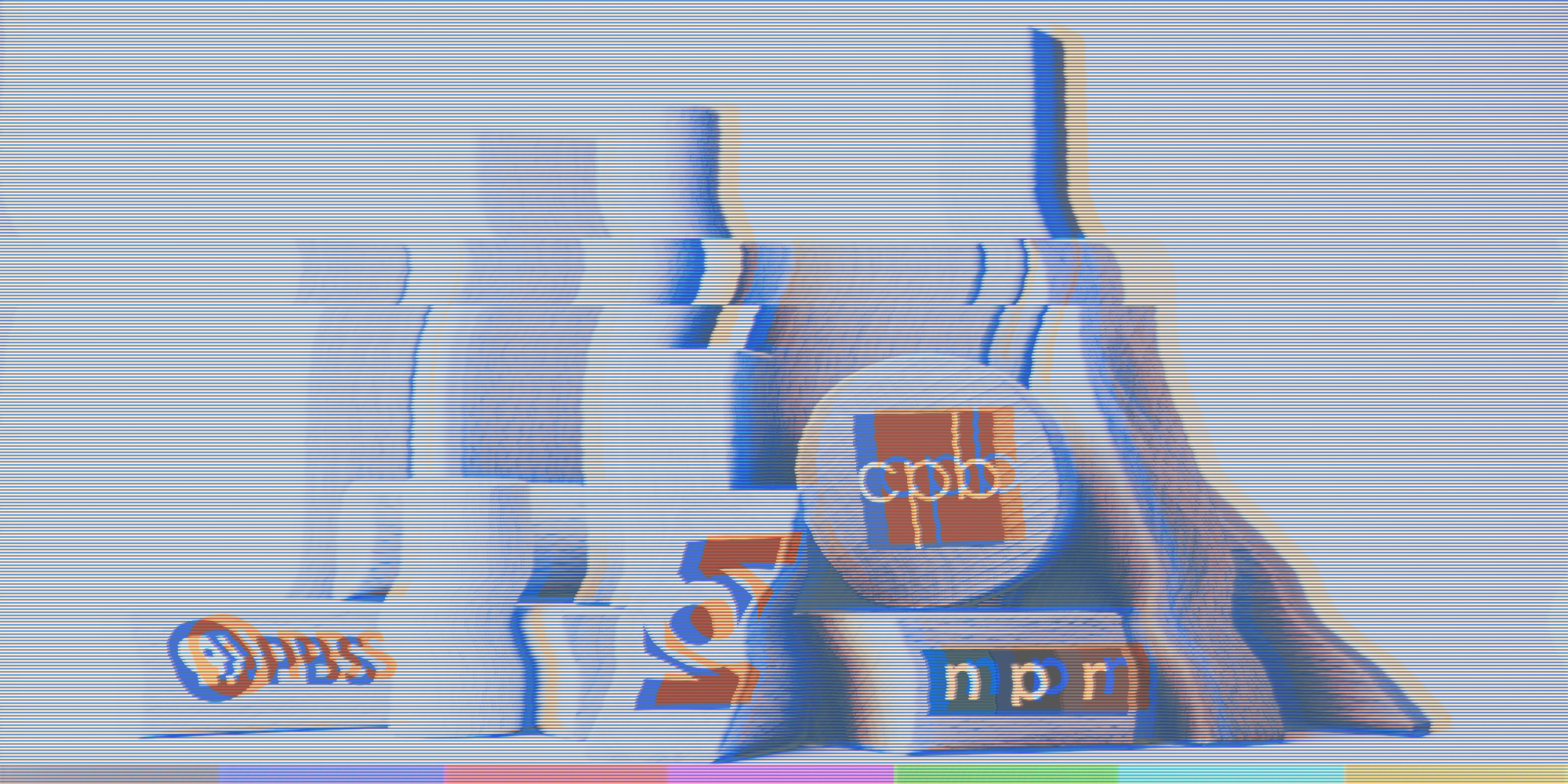
Back in 1967, the Carnegie Commission on Educational Television proposed creating an independent, nonprofit corporation to fund and guide public broadcasting, including the idea of a dedicated public funding stream. President Johnson endorsed the report, and Congress enacted its central recommendation through the establishment of the Public Broadcasting Act of 1967, which created the Corporation for Public Broadcasting (and, in turn, this led to the development of PBS and NPR as a networked system of public broadcast entities). The original vision was clear: a system publicly funded, insulated from both market forces and political interference, and accountable to the public it served.
More than fifty years later, with the Corporation for Public Broadcasting dissolving (along with the primary funding mechanism for public media being stripped away), we have a rare chance to rebuild this system entirely and reclaim the vision it once imagined.
The Guiding Question
If we could redesign an American public media system, what institutional form, governance structure, and funding models would be more capable of serving public interests, including improved health and well-being of local communities across the nation?
- In my early findings, reverse-engineering the White House Executive Order ‘Ending Taxpayer Subsidization of Biased Media’, the criteria for a new system should:
- Reaffirm independence through transparent governance and protections against political interference
- Modernize funding to sustain local media without market or political pressure
- Expand participation by empowering community stations, universities, nonprofits, and independent producers
- Learn from other models internationally and from existing state/regional experiments
Building on existing work
This research is not starting from scratch, nor is it intended to replace the important work already underway. It aims to amplify, synthesize, and help connect efforts that are often happening in parallel.
First and foremost, this research is grounded in a long lineage of inquiry into the role of media in democratic life, beginning with the Carnegie Commission on Educational Television and its landmark reports in 1967 and 1979, which asked foundational questions about the purpose, structure, and funding of noncommercial media in the United States. Those reports framed public media not simply as programming, but as civic infrastructure, and they continue to shape how we understand independence, access, and public accountability.
Building from the Carnegie Commission’s foundational work, this research uses a mixed approach that brings together historical public media analysis, academic and foundation-supported research, policy proposals, and insights from filmmakers, journalists, and public media practitioners. It engages current responses to today’s market and technological realities, including emerging streaming and digital advertising tax models; participatory frameworks such as Collective Wisdom: Co-Creating Media for Equity and Justice; and policy proposals that consider digital communications technology as an essential part of the system, (such as Sanjay Jolly and Ellen Goodman’s A “Full Stack” Approach to Public Media in the United States). This research also draws from contemporary Senate testimony on the television and video marketplace, and from the many practitioner-led convenings (including the ones most recently at Camden International Film Festival and Hot Springs Documentary Film Festival, when I first started this project) that surface real-world constraints, tradeoffs, and reflections on current and past community media organizing lessons.
My hope is that this work helps surface points of alignment, open discussion around difficult choices and trade-offs, and support those already engaged in rebuilding public media by offering shared language, evidence, and policy interventions that can be adapted across contexts and re-anchor public media in the trust, participation, and support of the communities it exists to serve.
What’s coming next
This first post is the start of a multi-part series. Some posts will focus on history. Others will test early ideas. None of this is meant to be final.
- Upcoming posts will explore:
- How we got here, from the Carnegie Commission’s vision to today’s structural contradictions)
- What a redesigned public media system could look like, and what it means to serve the public interest
- Examining streaming, advertising, and platform-based revenue mechanisms
- How change could realistically happen, politically and institutionally